Friday, April 1, 2016

A IS FOR A.I.


      If you define artificial intelligence as a device which can be programmed to run without direct human intervention, then the robots of today are so, so yesterday.  Automatons have been around for an extremely long time, and their invention flourished in the 16th century.  Think of it: centuries, even millennia, before electronics were even dreamed of, people were using wires and springs and gears and levers and pulleys to create inanimate copies of animals and people which, once set in motion, could run on their own and perform incredible feats.
     Reports of ingenious automatons date back to the Old Testament empire of King Solomon, who reportedly designed his own throne so that one golden animal on either side of each step would reach out to help support him as he climbed, and once he had seated himself, an eagle would place a crown on his head and a dove would bring him a Torah scroll. 
     In a much later and somewhat more credible account from the year 949 A.D., ambassador Liutprand of Cremona described the palace of the Emperor Theophilos in Constantinople, including "lions, made either of bronze or wood covered with gold, which struck the ground with their tails and roared with open mouth and quivering tongue... a tree of gilded bronze, its branches filled with birds, likewise made of bronze gilded over, and these emitted cries appropriate to their species," and the emperor's throne, which "was made in such a cunning manner that at one moment it was down on the ground, while at another it rose higher and was to be seen up in the air."
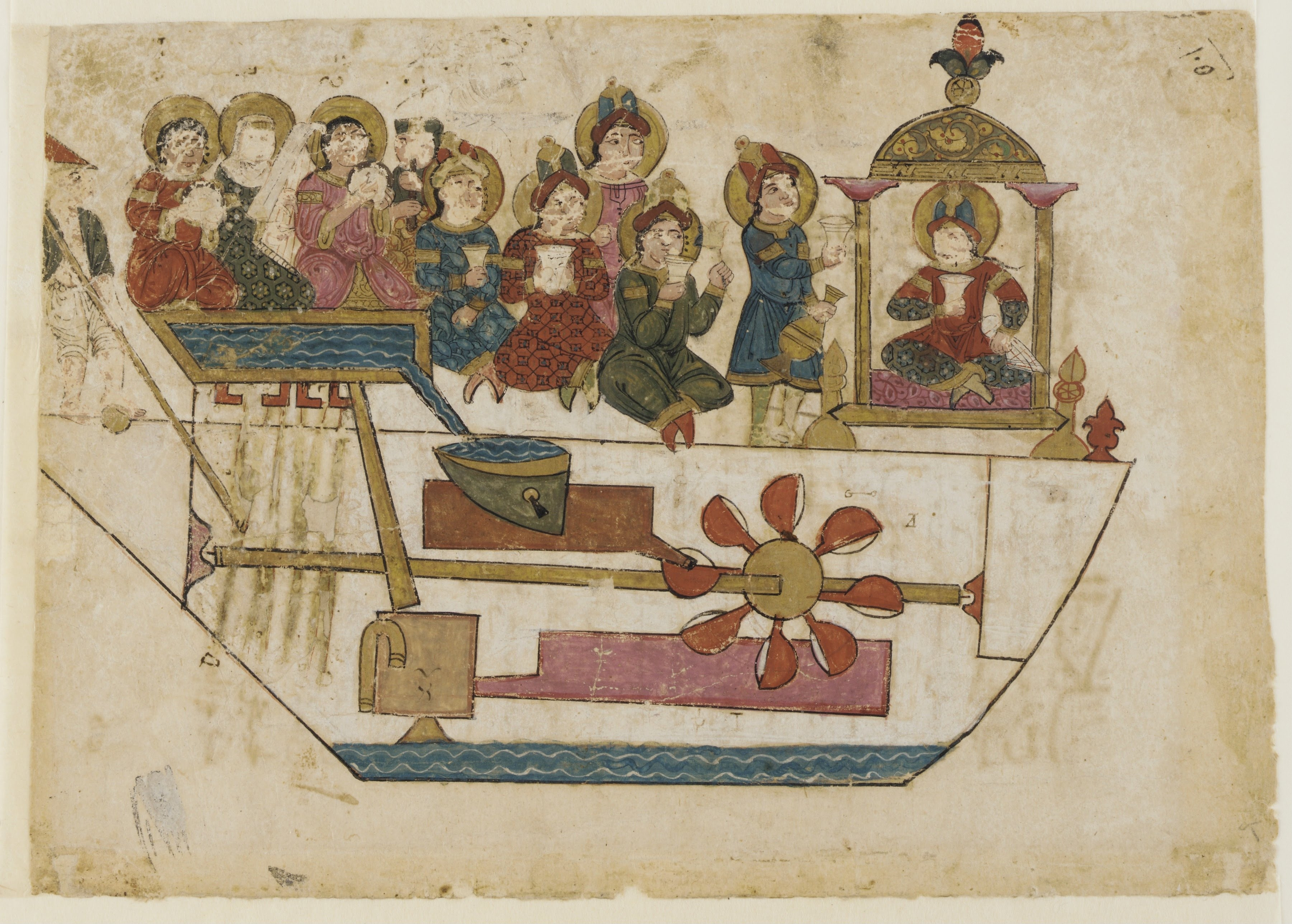
     Okay, one more before we get to the 16th century.  Ismail al-Jazari (1136-1206) was a genius: a gifted and creative mechanical engineer who liked to tinker with inventions on the side.  His Book of Knowledge of Ingenious Mechanical Devices described 100 whimsical objects he had constructed himself, including:
  • A tank which would be filled with some sort of drink, dripping gradually into a bucket and then periodically into a cup.  When the cup was full, a mechanical "waitress" would appear to guests out of an automatic door and serve the drink.
  • A peacock fountain connected to a hand-washing basin.  The user would pull a plug on the peacock's tail to release water from its beak, and wash his or her hands in the basin.  As dirty water from the basin fills the hollow base, a float rises and makes a humanoid servant figure emerge from a door under the peacock to offer soap.  When more water is used, a second, higher float rises and produces a second servant figure offering a towel.
  • A boat containing four automatic musicians which floated on a lake to entertain guests.  The drummer had a drum machine which could be programmed to produce different rhythms.
     And now, on to our (my) century of choice!  The invention of automatons seems to have ebbed somewhat in the Middle Ages, but picked up again the 1500's when clockwork mechanisms had become perfected enough to be used for this purpose.  One extremely rare automaton, built in the 1560's, still exists, still works perfectly, and can be seen in the Smithsonian in Washington, D.C.  It comes with a backstory.  Legend has it that when the son and heir of King Philip II of Spain suffered a serious head injury, the distraught king promised God a miracle in exchange for the miracle of healing the boy.  The son recovered, and Philip kept his promise.  He commissioned a clockmaker and inventor named Juanelo Turriano to build a lifelike recreation of a beloved Franciscan friar, Diego al Alcala (later canonized as San Diego).  The 15-inch tall automaton is operated by a wound spring; it "walks," nods its head, mouths devotional prayers, raises and lowers a rosary and cross, and periodically beats its chest.  Watch it here:


     I'm aware that this little monk wouldn't meet everyone's definition of an A.I.  He can't think.  He doesn't play chess.  But what makes him such a marvel that watching him perform can fill a 21st century person with awe is that he's not only a mechanical device, but an exquisite work of art.  Five hundred years from now, Watson will be just a clump of metal and wires.  I'll take the little monk.
     

Monday, March 28, 2016

ON THE SUBJECT OF A TO Z...

     I've already revealed my theme: 16th-century analogues of 21st-century memes.  What I thought I should add here before the Challenge actually launches is that, despite my best intentions, my posts are going to be almost entirely Eurocentric.  Regrettably, I've found information in English about 16th-century Europe to be much more easily accessible than information about other continents.  (Of course, this fact says a lot in and of itself.)  Please don't take this to mean that I find only European cultures to be interesting or worthy of examination!  It's just that I have a limited amount of time to do research for each post, and so I've gone with what was easiest.  If I do the Challenge again in future years, I'll try to remedy this problem.  But for this upcoming April, our time machine will (with rare exception) be planted in European soil.

Tuesday, March 22, 2016

H IS FOR HUNGER GAMES


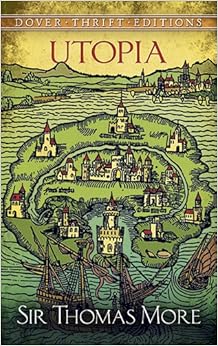
     The Hunger Games novels represent a long historical tradition of dystopian literature.  But that tradition would never have come into existence if it hadn't been preceded by its flip side: utopian literature.  And utopian literature had its start in the 16th century, with the 1516 publication of Sir Thomas More's groundbreaking novel,


     Wait, you say.  That Thomas More?  The one whom Henry VIII ordered executed for refusing to acknowledge the validity of Henry's newly-invented, purpose-driven Church of England?  Yes, friends, that very same dude coined the word "utopia" and published the first literary work about an imaginary perfect society.
     But who was this guy?  I'm glad you asked.  He was born in London in 1477 and was elected to Parliament in 1504.  During his studies to become a lawyer, More decided to enter a monastery, and tried to pursue both careers simultaneously.  After several years he gave up studying for the priesthood, but remained a pious believer (and, secretly, a wearer of a hair shirt) for the rest of his life, even though he married (twice) and had children.
     As a capable and respected undersheriff in London,  More caught the attention of Cardinal Wolsey, who brought him into the service of the young King Henry VIII.  More rose quickly, soon becoming the king's personal secretary and advisor.   In 1523 he was elected as speaker of the House of Commons.  All went well for him until Henry, in order to be able to divorce his first wife, Katherine of Aragon, created the fiction that the 20-year-long marriage must be annulled and that Henry himself was now the supreme leader of the English church. 
     More's conscience did not allow him to go along with this, marking the beginning of his end.  He was imprisoned in the Tower of London in 1534, indicted for high treason in 1535, and beheaded on Henry's orders not long after.
     But long before More's fall from the king's favor - in fact, shortly before he gained the king's favor in the first place - he wrote and published "Utopia," a name he created from the Latin words for "no place."  The novel is written in two parts: the first contains criticisms of then-existing English society, and the second describes an island society, situated in some unspecified location in the New World, in which all aspects of life are governed by reason rather than self-interest.
     Some of the more unique features of Utopian society include:
  • No private property.  All goods are stored in warehouses, and people request what they need.
  • Private space does not exist.  No doors can be locked.  The communal households all consist of 30 people, and everyone is under constant observation by everyone else.

  • Discussion of politics outside of the appropriate forum is punishable by death.
  • Euthanasia is practiced.
  • So is pacifism, if at all possible.
  • Houses, which are all built more or less alike, are rotated among citizens every ten years.
  • Every household is issued two slaves (who are either foreigners or criminals).  One of the ways a Utopian becomes a slave is by being caught traveling around the island a second time without your internal passport.
  • There are judges, but no lawyers.
  • Although premarital sex is punished by a lifetime of enforced celibacy, before marriage the proposed bride and groom are displayed to each other naked (to avoid surprises).  Penalties for adultery: 1st offense, slavery; second offense, death.

  • Divorce, married priests, and female priests are permitted.  There are a number of religions on the island, mostly pagan, all tolerant of each other.
  • Every citizen must spend occasional two-year stints on farms doing agricultural work.
     There are a number of features of More's Utopia that have caused commentators to wonder whether, in fact, the work was intended satirically, and More was actually describing his idea of a dystopian society.  For one thing, More was a staunch Catholic all his life, and as Lord Chancellor, he persecuted Protestants.  So did he really believe that a perfect society would be one which practiced religious tolerance, divorce, euthanasia, and noncelibacy among priests?  And as the highest-ranking lawyer in England, did he really believe that a perfect society would have no lawyers, because "they [the Utopians] consider them as a sort of people whose profession it is to disguise matters?"  And if he did believe all these things, why did he give his fictional traveler and guide to Utopia the surname Hythlodaeus, which in Greek means "spouter of nonsense?"
     Of course, no one will ever know the answer to any of these questions.  But what we do know is an old adage that probably dates back before the 16th century: one man's meat is another man's poison.  Some of the laws of Utopia sound like they were borrowed from the Taliban, if you ask me.  Maybe Utopia and Dystopia are not that far apart after all.

     All right, stay with me here.  Without Thomas More, there would be no utopian literature.  Without utopian literature, there would be no dystopian literature.  And without dystopian literature, there would be no Hunger Games.  Thus, Thomas More is the great-great-great-great-etc.-grandfather of Katniss Everdeen.
     Don't believe me?  Look closely.  There's Katniss, up at the top.  And here's Tom.


Boom.  Is your head exploding yet?  How did people ever miss the resemblance???

p.s. For a great essay about dystopian novels, go to Heather Jackson's http://writeonsisters.com/writing-craft/masterplots-theater-d-is-for-dystopia/.  All her other A to Z posts about literary genres are terrific too!

Sunday, March 20, 2016

A TO Z THEME REVEAL!!!

     It's both the first day of spring, AND the day for the A to Z Challenge Theme Reveal!!!  YAHOO!!!  So, I'm a technological idiot, and it would take me a week to figure out how to post the badge for the 2016 A to Z Challenge, let alone the Theme Reveal badge, and I don't have a week to spare because I need to devote every minute to pre-writing my posts.  And so without further ado, or (alas) further badges, my theme is:

              SO YOU THINK YOU'RE SO MODERN?

     Here's the premise.  We 21st-century humans are convinced that we are incredibly original, and that we've invented every single current cultural meme entirely out of our brilliant imaginations.  The purpose of my posts is going to be to prove us all wrong.  Allowing for the differences that new technological discoveries make, I propose to show that, for the most part, people in the 16th century got there first.  Actually, my timeline is more like "up to and including the 16th century."  I give myself the option of diving even further back into history if I feel like it.  And my goals are to amuse, entertain, and maybe even edify (the order varies, depending on the post).
     Thanks for visiting!  Hope to see you back in April!!

p.s. OMG I'm such a moron.  Theme Reveal was supposed to be tomorrow!!  Perhaps that would explain why none of the A to Zers whose websites I visited today had yet posted theirs!!  Let's just never mind this minor screw-up, okay?  Erase my theme from your mind and then open this post anew tomorrow and say, Wow!  Awesome theme!  It's a idea whose time has come!!

oy.

Sunday, March 13, 2016

M IS FOR MICROBREWING


     This one isn't strictly fair of me.  Of course, all 16th-century breweries were microbreweries, because no factories of the time could produce the volume of beer that would qualify them as anything but.  Actually, you might say that the 16th century marked a period of transition from mini-microbreweries - individuals making beer in the home for family consumption - to breweries in pubs and monasteries, producing beer in larger quantities for public sale.


     Evidence of beer production dating back about 7,000 years has been found by archaeologists, although the process might well be even older than that.  But the addition of hops to beer came much later.  The oldest surviving written record of using hops in beer came from Abbess Hildegard of Bingen in the year 1067: "If one intends to make beer from oats, it is prepared with hops."  Hops were first introduced in northern Germany in the 13th century, and the process then spread to the Netherlands.  England began importing beer made with hops from the Netherlands in the early 1400's, and by 1428 it was planting its own hops.  At that time, hops were the ingredient that changed what was called an ale to a beer.  But by the 16th century, all ales and beers were made with hops, and the word "ale" was used to refer to any strong beer.  This was also the century during which lagers were discovered by accident after beers had been left stored in cool caverns for long periods.
     The addition of hops to beer was a crucial element in developing an export trade, because the various herbs used prior to hops didn't preserve the beer long enough for it to be shipped elsewhere without spoiling.  Germany remained the hub of beer production.  In the 16th century the city of Hamburg had more than 600 independent breweries, and was exporting beer to places as far away as India.  But even the largest-scale exporters in 16th century Germany would be considered very small fry by 21st-century standards. 
     As an interesting aside, what might be the oldest surviving European food regulation dealt with the subject of beer.  In 1516, William IV, the Duke of Bavaria, adopted a "purity law" requiring that the ingredients of beer be restricted to water, barley, and hops.  Enaction of a law that enforced quality control was, at the time, a groundbreaking concept. 
 
low-tech beer transport system
 
     Microbreweries, artisanal food production, locavorism...  everything old becomes new again.  Does anyone other than me find it funny that modern foodies would love to be transported back to the 1500's, a time 200 years before that damned Industrial Revolution came along and ruined everything?
I know, I know, I was ranting against food conglomerates in my J post.  Maybe I'm being inconsistent, and maybe it's because I don't like beer.  I do think that people should eat fresh un-processed food whenever possible, and that they should cook it themselves.  Sometimes, though, trends just get to the point of being ridiculous, IMHO.  Your thoughts? 


R IS FOR ROGAINE


      Sorry, whoever it is that makes Rogaine; you're way late to the baldness-curing party.
     About 3,000 years ago, ancient Egyptians were rubbing the fats of various animals (lion, hippo and crocodile, to name a few) into their scalps to regrow hair.  As an alternative method, they would sautee the leg of a female greyhound in oil with the hoof of a donkey, and apply the resulting mixture to their scalps.  Alas, we don't have any before-and-after photos to prove how incredibly effective these methods must have been.
     A thousand years later, the Greek physician Hippocrates (you've heard of his Oath?), who found himself going bald, prescribed a remedy he had invented: a topical mixture of opium (good for whatever ails you, as I noted in my "Doping" post), horseradish, pigeon droppings, beetroot and spices.  OMG, how could the Egyptians not have thought of that???
     And yet somehow, male-pattern baldness persisted.  But, as you might expect, scientific knowledge had made tremendous leaps forward by the 16th century.  That's when British herbalist John Gerard recommended that hair-loss sufferers stand in the sun while rubbing onion juice into their scalps to stimulate the hair follicles.  Apparently King Henry VIII either was not privy to this information, or tried it and wasn't happy with the results.  Several sources I found report that when Henry started losing his hair, he addressed the problem by rubbing both dog and horse urine into his scalp.  Sadly, I don't have any pictures of him engaging in this practice to show you, and that leaves me to wonder whether he did the rubbing-in himself, or entrusted that task to his Groom of the Close Stool.  But here's what else I wonder: whose job was it to follow the dogs and horses around with bowls or jars or whatever else they might have used to catch the flow?
     I don't know whether or not that enchanting custom died out after Henry's death, but allow me to present you with a recipe from a book called Queens Closet Opened: Incomparable Secrets in Physick, Chirurgery, Preserving, Candying, and Cookery (1655):

          Take three spoonfuls of Honey, and a good handful of Vine sprigs that twist
           like wire, and beat them well, and strain their juyce into the Honey, and
           annoynt the bald places therewith.

     This remedy might have been every bit as futile as the animal-urine one, but can we agree that it would have made the user a whole lot more popular?


Wednesday, March 9, 2016

WOULD YOU CONSIDER AN A TO F CHALLENGE?

     So I signed up for the Blogging from A to Z Challenge - third year in a row.  A pledge to produce 26 blog posts in the month of April, one every day except Sundays, tripping lightly through the alphabet.  And I have my theme, and I love my theme.  But it's March 9th, and so far I haven't gotten past the letter B.
     As I learned from previous challenges, prewriting at least some of your posts is essential.  There's just no way to be able to commit to spending several hours every night, six nights a week, for a month, composing posts.  Life gets in the way.  It's best to prewrite as many posts as you can, as early as you can, so all you have to do on the designated day is hit "publish," sit back, and bask in your glorious productivity.
     Right.  So, as I said, I just finished prewriting my post for B.  The topic I've chosen is requiring a lot more research per post than I was anticipating.  Not going to tell you what my theme is because that's what Theme Reveal Day (March 21st) is for - duh - and if you forced me to reveal my theme before the appointed day, I would unquestionably have to kill you.  But trust me, it's a good theme.  The best thing about it, from my viewpoint, is that it involves a lot of things I don't know much about, so it satisfies my curiosity.  The worst thing about it is that it involves a lot of things I don't know much about, so it requires me to spend a lot of time - time I apparently don't have - researching and writing.
     So I have a modest proposal.  What would be so terrible about an A to F Challenge?  Six perfectly reasonable letters serving as the catalysts to six delightful and leisurely posts?  Who are They to tell me that's not good enough, not challenging enough?  Go ahead, Challenge Police, do your worst.  I ain't afeard.  In truth, I'm thinking primarily of you, the Reader.  The last thing I want is to do is overload your poor brain with more information than it can absorb.  Let's face it: you have enough stress in your life already.  Do I seem like the kind of person who would want to add to it?
     So HA HA HA.  Here it is only March 9th, and I'm already 1/3 done!  I ROCK!!!
     Now, on to C...