Look,
obviously there were no computer-generated role-playing video games in the 16th century. Give me a break! But I contend that a kind of antecedent did exist back then. In modern role-playing video games, the player takes on the stylized persona of someone else - an avatar - and in that role, s/he has to improvise his/her way through an experience. I don't think it's too much of a stretch to trace such games back to the commedia dell'arte tradition which sprang to vibrant life in Italy during the 16th century.
Commedia performances essentially were a form of improvisational street theater. Individual street performers banded together to form traveling troupes, and the players developed their own chosen roles. The first record of a commedia troupe dates to 1545. The most famous early troupe, the Gelosi, was founded by a husband-and-wife team and performed from 1568 to 1604. Over time, universal stock characters were created:
vecchi (old men/masters), a category which included
Il Capitano, a bullying braggart in military uniform who is always revealed to be a secret coward;
innamorati (young lovers), who must overcome obstacles thrown at them by the
vecchi; and
zanni (eccentric servants/ clowns, including
Pierrot and
Harlequin. This is the origin of the English word zany).
 |
| Harlequin |
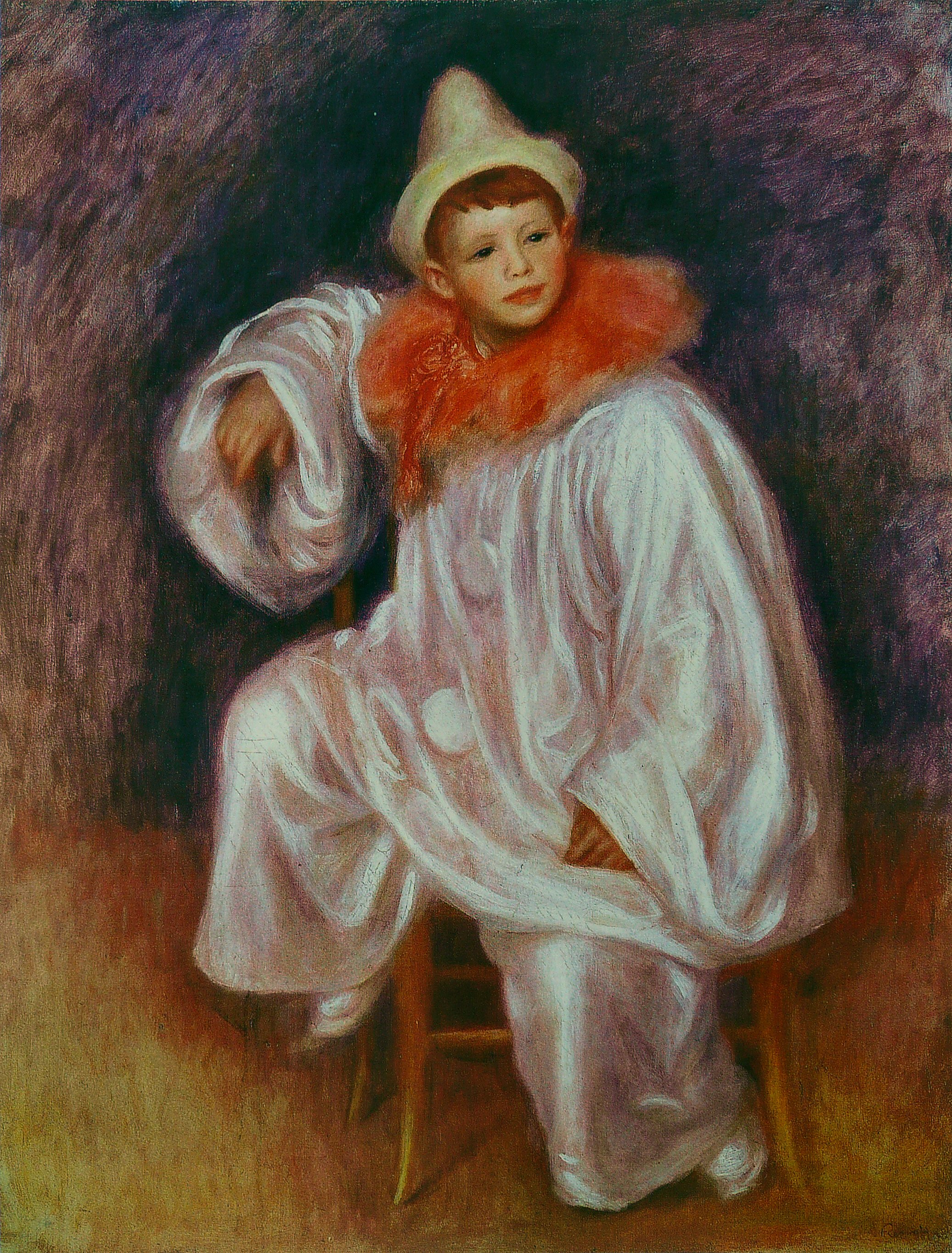 |
| Renoir's "White Pierrot" |
The actors who played the
zanni were often acrobats, singers or musicians, and during intermissions would present their own performances, called
lazzi, that entertained the audience but had nothing to do with the main event (basically, half-time shows). Audiences could identify the characters by the distinct costumes and masks each wore. The lovers were the good guys, the characters the audiences rooted for; the authority figures were the bad guys, the funsuckers, and they were the ones the audiences loved to hate. Plots were minimal and generic. The most common were rom-coms, in which the lovers had to outwit the scheming
vecchi with the help of the silly but loyal servants. Other common plots involved adultery, jealousy between husbands and wives, or the outwitting of a buffoonish character by his cleverer servant. The acting style was exaggerated, over-the-top. There was usually a happy ending. In short, everything was about as far removed from classical drama as it could possibly be, and audiences just ate it all up (and still do. Where would Jennifer Aniston's career be without it?).
Although the basic parameters of character and plot were preplanned, all of the dialogue and some of the stage business would be improvised, which allowed talented actors to adapt their schtick to suit the preferences of particular audiences and to add topical humor to the mix. Just as in modern-day improv, the players had to be witty, flexible and creative. In short, the phenomenon of
commedia dell'arte (literally, "comedy of professional artists") introduced the concept of professional actors to Italy, and from there, to the rest of Europe.
 |
| Watteau, "Italian Comedians" |
Commedia dell'arte became wildly popular in Italy during the sixteenth century, and its fame spread to France, England, Spain and Bavaria. By the end of the seventeenth century, though, the art form came to lose much of its charm and spontaneity, and died out soon afterward. But its influence is still apparent in puppet shows, mime and slapstick.
And video games. Stay with me now. Role-playing: check. Stylized characters: check. Clearly identified good and bad guys: check. Need to improvise: check. In my opinion, all fans of role-playing games owe a debt of gratitude to these 16th-century innovators.

