Thursday, June 30, 2016

SOMETIMES A FLOWER CAN GROW IN AN UNEXPECTED PLACE

Let's see if I can copy my whole previous post, plus comments, so you can scroll to the bottom of the comments and see what I mean:


Wednesday, September 26, 2012


IN HONOR OF DEBORAH BRODIE


 Yesterday I was browsing through my new SCBWI newsletter and Deborah Brodie's name caught my eye, as it always does.  But this time, the news was that she passed away at the end of June, after a long struggle with cancer.  She was only 67.
     I first met Deborah about 21 years ago.  My son Nathan was 2, I was working on a long rhyming picture book featuring him, and I was desperate to take a class I'd read about at the New School on writing for children.  I was a single parent, and my dear friend Sonia gave me the best birthday present of all time: an offer to watch Nathan for me each week, for the duration of the class session.
     The instructor was a woman with a jolly voice and twinkling eyes named Deborah Brodie, and the first thing I learned was to ditch my dreams of having "Nathan and the Urch," or just about any rhyming picture book, published.  "Dr. Seuss is dead," Deborah told us crisply.
     I learned a lot more than that from her, but the main thing I learned is that children's book publishing is an industry and that children's book writing is a profession; neither one existed only in some magical realm.  And I also learned of the existence of SCBWI, a haven for people who want to learn to write for children and get their work published.
     When the class ended, I didn't know how to thank Deborah for opening up a new world for me, so I brought her a rose.  A few days later, I got a thank-you note at home from her.
     I followed Deborah over the years.  After over 20 years as an editor with Viking Children's Books,  most of that time as executive editor, she left in 2001 to co-found Roaring Brook Press.  In 2007 she left there to become a freelance editor, writing instructor, and "book doctor."  All along, she did her teaching on the side.
     When I read that "book doctor" announcement in an SCBWI publication, I contacted her and ended up sending her a manuscript for doctoring.  She did a very thorough and enormously helpful job, and after that we occasionally stayed in touch by email.  Yesterday, after reading her death announcement, I went back and saw that, as I'd thought, I still had a saved email from her, sent in late 2009, responding to an email I'd sent her about her new website and saying, "I'm still hoping to see your name in my 'good news' column one of these days!"
     I've been reading Deborah's obituaries.  I don't know whether anyone can count how many new authors she's discovered, how many new careers she's launched, or how many still unpublished writers there are like me that she just kindly and graciously helped to move forward.  I do know that she was a beloved figure to many, both inside and outside the publishing and writing worlds.  I read this today, from her son: when Deborah learned she did not have long to live, she said, "Why me?"  But, unlike other people who ask that question, she went on to ask, "Why have I been so blessed, with such wonderful children, grandchildren, and my life?"
     Today is Yom Kippur, a day of remembrance, and along with other people I have lost in my life, I remember Deborah.  But, of course, she was only human, and although she knew a lot, she wasn't always right.  Dr. Seuss isn't really dead.  And neither is she.

6 comments:

  1. Sweet! That's all a person can hope for in life - To make a difference.
    ReplyDelete

    Replies


    1. Well said. Thanks, Genevieve!
      Delete


  2. Deborah, that was beautifully written, and if you know how to contact any of her family or friends, I think you should send them the link to this page.

    I didn't know her at all, but after reading this, I feel like I know "the essence" of her and it seems she was a wonderful person.
    ReplyDelete
  3. Thank you, Donna. I appreciate your thoughts. I don't know how to contact her family or friends, but I'm sure they've received a lot of other tributes to her. She was a special person.
    ReplyDelete
  4. On Monday, exactly 4 years after Deborah Brodie died (6.27.12) I did a Google search to see what came up when I typed in her name. This post appeared, as well as the exchange above.

    I'm Deborah's daughter, Rachel and I hadn't seen this before and while you were right, we did receive a lot of other tributes, I was particularly moved, delighted and grateful to read this one. Your anecdote about Dr. Seuss is classic Deborah Brodie, and so was her email rooting you on....

    Thank you so much for publicly sharing your memories both because your post is a beautiful addition to her legacy and, more personally, because it meant that I could stumble across it so many years later and feel the rare pleasure of having a new and as-yet-unheard Deborah story to share with the rest of my family.

    Thank you!
    ReplyDelete

    Replies


    1. Rachel, I'm so grateful that you found this post and were thoughtful enough to respond to it. Like mother, like daughter, apparently. Deborah made a lasting impact on many people, and she will always hold a place in my heart. Very best wishes to you and your family.
      Delete


Sunday, June 26, 2016

BREXIT AND ME

     I guess I understood the basics of Brexit.  It's just that I, along with the oddsmakers, never thought it would happen.  But when it did happen, I just couldn't understand what would lead anyone to vote for Britain's exit from the European Union.  I couldn't understand it, that is, until I woke up at about 5:00 this morning and realized that the reason I was sleeping so badly was that I had managed once again to infect myself with poison ivy.
     It's become something of a summer tradition for me.  Most of the time I leave whatever landscaping gets down around my house (and it's not much) to my husband.  But one day toward the beginning of each summer, some sort of hormone is released within me and I start ripping things down.  Ivy, dead wood, creepers, vines... you get the picture.  Now, I know from experience that poison ivy - or poison oak, or poison sumac, or some other poisonous plant - lurks somewhere in my yard, and that in order to sensibly protect myself before I start on my ripping frenzy, I should put on a long-sleeved shirt, and long pants, and gardening gloves.  But here's the thing: I don't want to dress sensibly.  It's hot out, and I feel like wearing my T-shirt and shorts, and besides, NOBODY IS THE BOSS OF ME.  So every year, I go out there and do what I am apparently programmed to do: convince myself that I won't go anywhere near the Poison Whatever, and that there is absolutely no risk involved, and that I will be just fine.  And then I wake up one morning and I'm astonished to find that my entire body is a mass of rashes.
     But this time I feel like I learned something.  Not about avoiding poison ivy in the future - don't be silly! - but about what it must have felt like for the British people who voted for Brexit.  It must have felt like: HA.  YOU (E.U.) ARE NOT THE BOSS OF ME.  I can act in ways that are directly contrary to my own interests, and no one can stop me!  Hey look, I can make the British pound reach its lowest value of the past 30 years!  I can drive global markets into turmoil and strike terror into the hearts of investors around the world!  I am so damn powerful!  Whee!!!
     The difference is that when I choose to perversely attack my back yard in shorts and a T-shirt, the only one who ends up suffering is me. 

Sunday, June 19, 2016

Hi.


      I never meant to abandon my blog for more than a month. I think that's the longest I've ever gone without posting since I first began this blog.  Sometimes things just happen.  After I finished (HUZZAH!) the A to Z Challenge at the end of April, I was working on a guest post for my friend Guilie Castillo's wonderful blog, Life in Dogs, about my family's recent Circle of Life journey: losing our adored older dog in February, adopting a new dog in April. After that was done, it took me most of May to recover from those two intense writing experiences.
     And then the New Jersey SCBWI annual Conference was the fist weekend in June, so it seemed to make sense to wait until it was over so I could blog about my news.  But then when it was over, I didn't have any news.  I had two critiques with agents and neither one of  them asked me to submit anything. It's been years since that happened to me at a conference.  On the one hand, this made me realize how fortunate I've been, but then on the other hand, that realization didn't make me feel any less depressed.  It's never ideal to feel like you're going backward instead of forward in trying to achieve your dreams.
     Yeah, but I'm not giving up, though.  Over the last week I've sort of gotten a second wind.  Okay, maybe nothing as powerful as a wind.  Maybe it's more like a second mild breeze.  Still, I'm back.  And thanks for sticking by me.  

Monday, May 9, 2016

A TO Z CHALLENGE REFLECTIONS POST

     This was my third A to Z Challenge and probably my favorite so far.  I got to not only play historian, but to get creative too.  It wasn't always easy to come up with 21st-century cultural memes that had 16th-century analogues, but I managed.  I guess my underlying goal was to help make people realize that life on Earth has been around for a very long time, that 500 years is just the blink of an eye, and that people who lived in the 1500's thought and felt and dreamed and schemed very much like people of the 21st century do.  It was an incredibly innovative time, bringing huge advances in science, communications, philosophy and the arts that changed the world every bit as much as the Internet has done for you and me.
     But of course, the satisfaction I derived from my own blog posts is only a part of what the A to Z Challenge is about.  The real genius of the Challenge is its focus on interactivity - discovering new blogs and bloggers, reading and commenting on their posts, replying to their comments on your posts.  Because as fascinating as it is for me to discover 16th-century people I'd never heard of, it's maybe even a little better to discover some new contemporaries who love to blog as much as I do.  The Challenge, at its heart, is about creating and sustaining a supportive community, and that's a really wonderful goal.  So once again, I'll thank Yvonne Ventresca, my friend and the very talented author of the Crystal-Kite-winning YA novel PANDEMIC and the forthcoming YA thriller, BLACK FLOWERS, WHITE LIES, due out in October (I can't wait!)  Among the many ways Yvonne has always supported me and my writing career, she was the one who first told me about the A to Z Challenge and encouraged me to participate.  And I want to thank the A to Z founders, hosts, minions and participants for making the month of April so exciting and rewarding!  I'm very proud to be part of this annual adventure.

Friday, May 6, 2016

DOUBLE-NOMINATED FOR THE LIEBSTER AWARD!!!


  Two days ago I was nominated by Sarah Zama at The Old Shelter (http://theoldshelter.com) for the Liebster Award.  I must admit I'd never heard of it, but it was so cool to be nominated by a fellow blogger! Sarah somehow found the time to loyally read my A to Z Challenge posts and leave many generous comments, while doing all her own well-researched and fascinating daily alphabetic posts about the 1920's jazz scene. Of course I accepted, but today, while I was still preparing my acceptance post, I was nominated for the same award again, this time by J. Lenni Dorner at http://jlennidorner.what-are-they.  I'm incredibly grateful to both Sarah and J.  My cup runneth over!!
    
So the first thing I have to do is answer 11 questions Sarah asked me, which are:
  1. Q: When your started your blog, did you know what you were doing?
          A: Are you kidding me?  I still don't know what I'm doing!  I'm a technophobe with a very tiny blogger toolkit.  Basically, I know how to write and publish posts, how to include photos from Google Images, and how to answer commenters.  That's kind of it.

     2.  Q: Many writers I know tell me they don’t blog because they prefer to write their own stories. Why do you?

          A: I started my blog at a time when I was feeling immensely frustrated that none of the YA novels I was writing were getting published.  I decided that, rather than continuing to wait for the brass ring to fall into my grasp, I would be proactive and just WRITE.  It's been a godsend to me.

     3.  Q: Do you plan your posts?

           A: Define "plan."  I don't post on any regular schedule (except for the A to Z Challenge, of course).  But when I do have something I want to write about, I don't just dash off my posts.  I take my time editing them to try to make them as interesting and well-written as I can.

     4. Q: Do you stick to a posting schedule?
     
          A: Oops.  I think I just answered that one.

     5. Q: When you sighed up for the AtoZ Challenge the first time, did you know what you were doing?

          A: Well, I had a theme, I knew what my subject was going to be for each post, and I had pre-written some of them (I can't remember how many).  Does that qualify as knowing what I'm doing?

     6. Q: What were you thinking when you sighed up the second time?

          A: I was thinking that I really got a kick out of doing it the first time and that I was going to enjoy participating a second time with a completely different theme.

     7. Q: I can hardly resist a blogging challenge. Do you participate in many?

          A: The A to Z is the only one in which I participate.  I feel like my time is spread so thin that if I tried to participate in any more of them, I would dissolve into dust.

     8. Q: What is the blogging challenge which was the most fun for you?

          A: Damn! There I go with my premature answering again!

     9.  Q: Did you ever produce a vlog? If not, would you consider doing it?

           A: Me? Figuring out how to produce a vlog? [hysterical laughter]

     10. Q: Have you ever read articles about marketing to learn promoting your blog?

            A: No, I haven't.  I still think of my blog as a vehicle for entertaining myself, and if anyone else stumbles across it and likes it, so much the better!  Yeah, I'm not exactly a born entrepreneur.

     11. Q: Do you think writing a blog is the same as writing a book?

            A: I think that writing a blog is completely different from writing a book, other than the fact that they both involve writing.  My blog is about me.  I write novels, which are only about me in ways I'm not fully aware of.


And now I believe I have to try to answer J's questions too:

  1. Q: What sets your blog apart? Why is it special or different?
A:  Honestly, it's pretty funny.  I've been a wiseguy all my life and that trait doesn't seem to be going away no matter how old I get.  I routinely crack myself up.

     2.   Q: What spin would you put on this? “An apple a day keeps the doctor away, but _____”

A:  "never leaving your house achieves the same goal.  Nobody makes house calls these days."

     3.  Q: Red Vines, Twizzlers, or other type of red licorice?

A: So sorry.  I hate licorice.  Are you going to revoke my nomination?

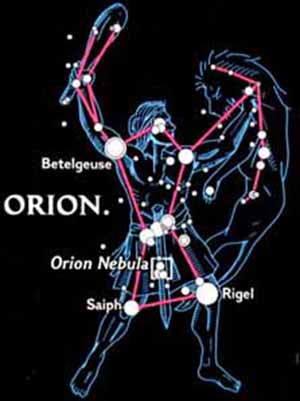
     4. Q: What's your favorite constellation? (Include an image if you can!)

A: Orion, without a doubt.  In the winter - my birthday season - he's directly overhead every night, and I feel like he's guarding me. 


     5.  Q: If you could have one of any vehicle you desire, but it’s the only transportation vessel you can use for the rest of your life — what one would you choose?

A: If my current car would last me for the rest of my life, I'd be good with that.  I like hanging on to useful things.  Not a big fan of novelty.

     6.  Q: If you could save the human race from extinction, hypothetically, would you do it and why or why not?

A: I would.  Because I still hope that someday we may get smart enough to stop hurting each other and our planet.

     7.  Q: What’s your favorite scent?

A: I totally fail this one.  My sense of smell is very limited.  I'm glad when I can smell almost anything, even if it's gross.

     8.  Q: What is your favorite turtle, tortoise, or terrapin story?

A: The only one I know is the Tortoise and the Hare.  Shameful, but true.

     9.  Q: What does liberty mean to you, personally?

A: The right to dress the way I want, think the way I want, write the way I want, make my own hard choices.

10.  Q: What is the most memorable hobby of a fictional character you’ve come across?

A:  I'd say Hannibal Lecter had several of the most memorable hobbies I've ever come across.  You didn't say good hobbies, remember.

     11.  Q: If you could have one of the following abilities, which would you choose?
  • Able to easily swim the length of the English Channel
  • Eat 100 hotdogs in 10 minutes
  • Have more color receptors in your eyes, thus being able to see more colors, ultraviolet, infrared, and polarized light
  • Go back in time to kill one villain of your choice one time
  • Walk any tightrope without danger
  • Understand the needs/wants/desires of animals
  • Grow any plant or tree anywhere in under one week
  • Require only 2 hours of sleep after every 22 hours awake
  • Light candles with your mind
  • Have skin as hard and tough as carbonado diamonds, but with luster intensity from light reflection
A: Go back to the year 1930 and kill Hitler.  Because I'm Jewish, and for me it's personal.


ELEVEN MAYBE NOT-SO-RANDOM FACTS ABOUT ME

1. My brother/only sibling and I were born in the same calendar year, he on January 25th and me on December 15th.  (It took me decades to learn that these kinds of siblings are called Irish twins.)
2. That very same brother graduated high school at the age of 16.  That summer, he announced to my parents that he had been teaching himself college- and masters-level mathematics, and had applied and been accepted to a math PhD program at Harvard for the coming fall (with a full scholarship, of course).  He went on to get his PhD at age 20.
3. With my brother as my basis for comparison, I grew up believing that I was stupid.
4. I was accepted into college after my third year in high school, and graduated law school at the age of 23.
5. As a trial lawyer, I tried about 100 cases, and won my fair share.
6. I went on to work as an appellate lawyer.  I've argued about 40 cases before my state Supreme Court, and won my fair share.
7. Despite all of this, I've gone through most of my adult life still believing that I was stupid and that everyone else knew it, but they were too polite to tell me to my face.
8. About five years ago I was promoted to being a managing attorney in my office.  In this role, I have to supervise other attorneys and to participate in management decision-making.
9. To my amazement, I've found that I'm good at these tasks.  People at work - some very smart people - seek out my advice and opinions, and seem satisfied when they get them.
10. For the first time in my life, I feel like I might actually not be stupid after all.
11. And that's a really good way to feel. 

And now, huzzah!!  I get to nominate some awesome bloggers for this award!  Here's my list:

1. Nila Bose at Madly-in-Verse (nilabose.blogspot.com)
2. Guilie Castillo at Life in Dogs (http://lifeindogs.blogspot.com)
3. Stephanie Faris at Steph in the City (nominees are supposed to have fewer than 1,000 followers, and she just squeaks by with 977!) (http://stephie5741.blogspot.com)
4.Dahlia at Stories and More (http://mysilverstreaks.com)
5. Tamara Narayan, Author (www.tamaranarayan.com)


If my nominees accept, and I hope they do, here are the rules that must be followed:

RULES OF THE LIEBSTER AWARD

If you have been nominated for The Liebster Award and you choose to accept it, write a blog post about the Liebster Award in which you:
  • Thank the person who nominated you, and post a link to their blog in your post.
  • Display the award on your blog — by including it in your post and/or displaying it using a “widget” or a “gadget”.
  • Answer 11 questions about yourself, which will be provided to you by the person who nominated you.
  • Provide 11 random facts about yourself.
  • Nominate 5 – 11 blogs that you feel deserve the award, who have a less than 1000 followers.
  • Create a new list of 11 questions for the nominees to answer.
List these rules in your post (copy and paste from here). Once you have written and published it, you then have to:
  • Inform the people/blogs that you nominated that they have been nominated for the Liebster Award and provide a link for them to your post so that they can learn about it (they might not have ever heard of it!)

ELEVEN QUESTIONS FOR MY NOMINEES TO ANSWER

1. Is your blog your best friend?  Why or why not?
2. Blogging feels to me like a job ___ percent of the time, and like a joy ____ percent of the time.
3. What rules of Blogger Etiquette are most important to you?
4. Do you have any great tips for attracting readers to your blog?
5. What do you wish you could change about the education you had?
6. When you were a kid, what did you want to be when you grew up?
7. Of all the places you've lived, which one is your favorite?  Why?
8. If you had a time machine, which era would be your first stop?
9. What's the best thing that happened to you within the past week?
10. What's the fastest way to get on your bad side?
11. What's the one thing that never fails to inspire you?


Lord, I thought this post would never end!  I feel like I've run a marathon.  Thanks for reading, and please check out the blogs of the people who nominated me, as well as those of the people I've nominated, because they're all REALLY interesting.  Bye for now! 

Saturday, April 30, 2016

Z IS FOR ZINES

     For the last time, stop being so literal-minded!  (Get it?  "For the last time," because this is Z and the Challenge is now over?)  There were no actual 16th-century zines.  Come on!  Moveable type had only been invented in 1439!  But by the early 1500's, pamphlets had become a thing, and from there to the creation of periodical magazines, it was only a matter of time.
     Pamphlets were short, unbound or loosely bound booklets that could be printed at low cost and could be distributed by anyone willing to stand on street corners for hours at a time (or to pay someone else to do it for them).  Basically, pamphlets were a tool used by people who wanted to rant - about religion, about politics, about specific authority figures they hated - you name it. 
     In Italy, our buddy Aretino started out as a pamphleteer so he could spread his anti-authority satires far and wide.  In Germany, Martin Luther used pamphlets very effectively to promote the Protestant reformation. 


     Of course, the Church could play the pamphlet game too.

pamphlet depicting Luther as a seven-headed beast

     In England, writers like Thomas Dekker, Thomas Nashe, and Robert Greene used pamphlets to distribute their romantic fiction and social or literary criticism, Francis Bacon published his Essays as a series of pamphlets, and King Henry VIII had pamphlets distributed to publicly defend his break from the Catholic Church.  ("Like it's my fault they won't let me divorce my first wife after 20 years to marry that hottie Anne Boleyn!")
     French writers also distributed their fiction in pamphlet form.


     In the 1560's, long before the first newspapers were invented, pamphlets first began to be used in England to convey news to the public. 


     Unlike a book, a pamphlet describing a political event could be written and printed up within hours after it occurred, enabling people outside of court circles to quickly be in the know.  Elizabethan England also became the base for "pamphlet wars" - the use of pamphlets by groups holding opposing viewpoints to carry out public debates on issues ranging from the civil war to the roles of women in society.  In fact, pamphlets became so popular that the Queen herself recognized their propaganda value and took to participating in these discussions.
     Pamphlets continued to gain popularity well into the 17th century, and only began to die out after newspapers and journals became widespread.

                                   *                   *                    *                    *

     So there you have it, folks.  There were times when I thought I would never make it through this Challenge, but I survived, thanks in large part to the support and encouragement of a lot of amazing A to Z bloggers who, in addition to consistently writing wonderful posts on their own blogs, also somehow found the time to bloghop and offer kind words.  Sincere thanks to everyone who visited here, either to leave comments or just to read.  I love learning more and more about the 16th century.  For me, it's a well that never runs dry.  And I love sharing the things I learn with as many people as I can.  Blogs work so much better than 16th-century pamphlets in that regard!
     It's been a lot of work for me, but so much fun that it was worth every hour of research.  Ciao for now, and I hope to catch up with you next year, if not sooner!
    

Friday, April 29, 2016

Y IS FOR YELP

     No, silly, there was no system for members of the public to log in and rate everything they had ever experienced, from restaurants to acupuncturists.  There was no such democratic forum in the 16th century, but there were critics - drama critics, literary critics, art critics - and the things they wrote mattered to people.  Unlike present-day critics, however, they were often active participants in the arts which they discussed in their writings.  And they didn't focus their attention on a specific book or play or work of art.  Instead, it was all about theory.
      The greatest literary theorist of the Classical world was Aristotle, and once his Poetics had been translated into Latin in 1498, European literary theory constantly referred back to it.


 In Aristotle's view - at least as interpreted by Renaissance scholars -  all drama had to abide by the Three Unities: unity of action - almost complete focus on one main plot element; unity of time - all action to occur within a 24-hour period; and unity of place - all action to occur at the same location.  It's easy to see at a glance how constraining it would be for a playwright to have to follow those rules, and yet the 16th century was an age of Neoclassicism, and the notion of rejecting the Unities seemed like heresy to many intellectuals.
      One hot topic during the 16th century was the purpose of poetry (which basically included fiction in any form).  Julius Caesar Scaliger (1484-1558) exalted classical Roman authors (ironically in keeping with his first and middle names), and rejected any modern innovations that aimed to improve on what Scaliger considered perfection.  He also held the mainstream belief that poetry must serve a moral, didactic purpose.  This view was in direct contradiction to that of Luigi Castelvetro (1505-71), who wrote that the aim of poetry should be to keep the common people happy.  A completely different third view was voiced by the Englishman Sir Philip Sidney in his Defence of Poesy (published posthumously in 1595), in which he argued that the poet exists separately from society and is a creator of a new and variant form of nature.
     When it came to 16th century art criticism, one figure towers above all others.


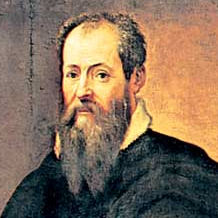
Giorgio Vasari (1511-74) was an Italian artist, architect, and most importantly, author of a masterwork: Lives of the Most Eminent Painters, Sculptors and Architects (1650-52).  This book earned him his reputation as the father of art history.  Vasari did not just present the biographies of artists; he also rated three periods of Western artistic development: the Classical (top-notch); the Dark Ages (the pits); and the Renaissance (a return to former glory).  Vasari was a juicy biographer, who didn't mind filling in gaps in his knowledge of individual artists with gossip and innuendo, but he was also a first-class theorist, and his views have influenced the study of art history right up to the present day.
     Maybe none of these people sound much like what we 21st-century folks tend to think of as critics, but the world has changed a lot since then, and the profession of criticism has changed along with it.  It's been a 500-year-long road, but trust me - it leads directly to Yelp.