Friday, April 3, 2015

C IS FOR NICOLAUS COPERNICUS

                                                                 (1473 - 1543)
    
     If there was one scientific fact that was perfectly obvious to everyone in the 15th century, it was that the Earth was the center of the universe.  After all, hadn't God fashioned it and separated it from the sky on the first day of the Creation?  And wasn't it home to every living creature?  And didn't the sun and the moon and the stars perform their dance across its sky each day and night while, as Ptolemy had written almost 1,000 years earlier, the Earth stood absolutely still and watched the show?  Case closed.   

EARTH IN THE CENTER OF EVERYTHING 
 
     In 1473, Nicolaus Copernicus - or rather, Mikolaj Kopernik - was born in Poland into a family of wealthy merchants.  His father died when Mikolaj was 10, and his maternal uncle, a Catholic bishop, became the boy's guardian and oversaw his education.  At 18 Mikolaj enrolled in the University of Krakow, where he studied astronomy, mathematics, philosophy, and the sciences.  Four years later, he had completed his course of study but not obtained a degree (as I've been learning while writing these posts, wealthy young European gentlemen of that era were not usually expected to obtain degrees; it was considered a rather middle-class thing to do, suggesting as it did that one might need to someday make a living).  Mikolaj was then sent by his uncle to the University of Bologna to study canon law, with the goal of becoming a Church official.  Mikolaj - who by now had Latinized his name to Nicolaus Copernicus - spent three years in Bologna pretty much ignoring the study of canon law and devoting himself instead to his true passions: mathematics and astronomy.  He also learned Greek, because many of the foremost astronomical treatises still being used, included Ptolemy's, had been written by ancient Greeks (yes, really) and were not available in translation.  If Nicolaus had been trying to subvert his uncle's plans for him, however, he failed.  His uncle pulled enough strings to have him appointed a canon in the Polish Church, although Nicolaus was still living in Italy!  Nicolaus's feelings about having been done this "favor" are not recorded.
     In 1501, Copernicus returned to his uncle's home in Poland, where of course he was expected to jump right into his canonical duties, but instead he managed to wheedle two more years in Italy out of his uncle, this time ostensibly to study medicine.  At the University of Padua, he focused on his studies of astronomy - no surprise there - but amazingly, also managed to successfully complete courses of study in medicine and law, all simultaneously.  When Copernicus returned to Poland at the age of 30, it was as a physician, a canon,  a lawyer, and an astronomer.   His travels abroad were over; he lived for another 40 years, and never left Poland again.  Ah, but in his mind, he waltzed among the stars. 


     From 1503 until 1510, Copernicus lived in the castle of his uncle the bishop, serving as his physician and personal secretary and accompanying him to parliamentary meetings throughout Poland.  At about the time of his uncle's death in 1512, Copernicus moved to the town of Frombork, where he settled permanently (he never married or had children).  He lived the life of an important and respected citizen, taking on many political and administrative duties over the years as well as serving as physician to the series of bishops who succeeded to his uncle's post. 
     But all this time, as busy as he was with other professional and civic obligations, Copernicus was living a second, semi-secret life as a mathematician and astronomer.  Other astronomers already knew that there were some serious problems with Ptolemy's geocentric (Earth-centered) view of the universe; for example, it did not account for the fact that Mars would occasionally be seen to travel backward across the sky, a phenomenon known as "retrograde motion."  If all the planets revolved around the Earth, as Ptolemy said they did, this wouldn't happen.  Rather than applying this information to assess whether Ptolemy had been right or wrong, however, astronomers instead came up with tortured explanations of how he could have been right despite retrograde motion.  But even while his uncle was still alive, Copernicus had begun to quietly question whether Ptolemy had been infallible after all.
     In 1514, Copernicus circulated to his friends his own handwritten book setting forth his theories.  The cornerstone of his thoughts was that the sun, not the Earth, lay near (but not at) the center of the planets, and that Earth, like the other planets, revolved around it.  Earth also rotated on its axis, causing the rising and setting of the sun, the movement of the stars, and the changing of the seasons.
     The only way to observe the sky at that time was with the naked eye.  Telescopes did not exist until the late 1500's, and no one trained one on the sky until Galileo did in the early 1600's.  But by 1532, having combined his own observations of the sky with the field of applied mathematics, Copernicus had completed the first draft of what would prove to be his life's work: a book entitled The Revolutions of the Celestial Spheres.  He showed it only to his circle of close friends, but it was so groundbreaking that soon word of it began to spread.  Everyone was curious, including the Pope, but Copernicus showed no inclination to satisfy their curiosity.  His book remained unpublished.      
      In 16th-century Catholic countries, saying or doing anything that the Church might interpret as heresy tended to greatly reduce one's life expectancy, and Copernicus (a prudent man) had every reason to be wary about how his book might be received by religious authorities.  But things changed for him in 1539 when Georg Joachim Rheticus, a German mathematician, came to Frombork to spend two years learning everything he could from Copernicus.  And what Rheticus learned convinced him that Copernicus was a genius and that his book must be published. 
     Eventually, Copernicus agreed to release a sort of trial balloon: he allowed Rheticus to publish a short summary of Copernicus's theories.  There was no reaction from the Church.  Copernicus had made the excellent tactical move of dedicating his book to the Pope, but that's probably not what saved him; it's much more likely that the book created no stir because it was so esoteric that almost no one understood it.  And so, Copernicus finally entrusted his precious manuscript to Rheticus, to have it published in Germany.  The Revolutions of the Celestial Spheres rolled off the presses in 1643, shortly before its author's death; the legend is that the proofs were brought to Copernicus as he lay on his deathbed, after which he closed his eyes and was able to die in peace.
     Copernicus's theories were not perfect; like Ptolemy, he made mistakes, which others who came after him were able to correct through the use of improved technology (like telescopes).  But Copernicus was one of the giants on whose shoulders Galileo and Kepler later stood when they reached past him even deeper into the heavens.


p.s.  The reason for retrograde motion is that Earth is revolving around the sun on one circuit, and Mars is revolving on another, and occasionally Earth overtakes and passes Mars.   

Thursday, April 2, 2015

B IS FOR LOUISE BOURGEOIS BOURSIER

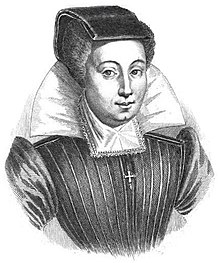
Louise Bourgeois was born into a wealthy French family in 1563.  At age 21, she married her neighbor, the master surgeon Martin Boursier, and they settled outside of Paris.  (Boursier, by the way, had been a longtime student of an amazing man named Ambroise Pare ... and check back here on "P" day to learn more about him.)  Five years later, while her husband was away in the army, Bourgeois and her three children were forced to flee from Henri IV, who had attacked the city of Paris during the Religious Wars, and to leave almost all their possessions behind.  This left Bourgeois' family in a difficult financial situation.  In order to help make ends meet, she began to study, and then practice, midwifery.  For five years, she chose to practice among the poor, and in 1598 she passed the official licensing examination and became a registered midwife.


     She must have very quickly developed an outstanding reputation, because only three years later, in 1601, Bourgeois was chosen to be the royal midwife to Queen Maria de Medicis, wife of that same Henri IV (apparently Bourgeois was willing to let bygones be bygones), and between then and 1610 she successfully delivered all of the Queen's six children.  In the meantime, she managed to write and publish a book entitled (in English translation) Various Observations on Sterility, Miscarriage, Ability to Conceive, Childbirth, Female Illnesses, and Infants.  So, clearly, she wasn't just in the business of delivering babies; she was a full-service ob/gyn.  In the book, she described herself as "the first woman practicing my art to take up the pen."  First published in 1609, this book was updated and republished multiple times over the next 40 years, was translated from the French into four other European languages, and it became the classic text on the subjects it covered.
     Bourgeois continued to write and publish, as well as to work as a sought-after midwife to noblewomen, until 1627, when she served as midwife to Marie de Bourbon Montpensier, the Duchess of Orleans, who died of fever shortly after giving birth.  The (male) physicians who performed Montpensier's autopsy determined that Bourgeois had been negligent, and her professional reputation suffered as a result.
     Bourgeois did not let this setback put a stop to her career.  She had a lifetime's worth of practical knowledge to impart to other women.  Think about it: consider all the complications that can still arise in pregnancy and childbirth, and subtract 500 years' worth of scientific knowledge.  This was not a profession for the faint of heart.  Already 67 years old, when anyone else might have considered retirement, Bourgeois continued writing and publishing books until just before her death in 1636.  Her last book, the Book of Secrets of Louise Bourgeois Boursier,  published in 1635, was a compilation of recipes to treat female medical ailments such as skin eruptions and painful menstruation.
     As an educated woman, married to a surgeon, practicing midwifery, Bourgeois aroused the distrust both of midwives from lower social classes (for being too book-smart) and of male medical practitioners (for not knowing her place).  To quote from Collette H. Winn in ENCYCLOPEDIA OF WOMEN IN THE RENAISSANCE:  "In a time of growing suspicion over women's capacities to handle child delivery, Louise Boursier understood the need for formal training and collaboration with male physicians and surgeons.  She saw herself as the founder of a new generation of midwives, more knowledgeable and better trained.  In her efforts to educate those who would follow her, she published Instruction a ma Fille (Notes for my Daughter), the first treatise in French on the art of midwifery.  She recorded her theories on maternity care and her experiences in Parisian society in her Recit Veritable (True Account).  This important work provides a unique source of information about midwifery practices in the early modern period as well as insights into the challenges women faced as they entered the professional world."
     In other words: five hundred years before Sheryl Sandberg, Bourgeois was one of the first known proponents of leaning in!

Wednesday, April 1, 2015

A IS FOR ARCIMBOLDO


     Ah, the unrivaled genius of Europe's sixteenth-century painters: Leonardo.  Michelangelo.  Raphael.  Arcimboldo.  WHO???
     What?  You never heard of Giuseppe Arcimboldo (1526-1593)?  That's weird.  He was a genius too.  Here's a self-portrait:

                                                                A Serious Man

     Born in Milan, he began his painting career in the way that was the norm at that time: focusing on religious subjects, for which he received his first paid commissions.

 
stained glass, 1549


tapestry, 1558

     In 1562, he assumed the prestigious post of court portraitist for the Hapsburg emperor Ferdinand I in Vienna.  In 1565 he relocated to Prague to become the official portraitist to the Holy Roman Emperor Maximilian II and his family,

Maximilian II, his wife and three children

                                                Archduchess Anna, Maximilian's daughter


and then, after he came to the throne in 1576, Maximilian's son Rudolf II.

      Arcimboldo remained a court portraitist until his retirement in 1587 at age 61.  And he did the things one would expect for his royal patrons, who had way more money than they knew what to do with.  In addition to painting portraits, he designed fanciful sleighs

 
and costumes for pageants (because he was also the royal Party Planner).


     But somewhere along the way, his work started getting a little... unusual.  No, a lot unusual.  Take, for example, his portraits of some people who weren't members of the royal family:

                                                               The Librarian


                                                                      The Cook


                                                              The Admiral


And then there were other paintings that seemed to be portraits...


                                                 until you turned them upside down...
  
 
  Like so:
 
 
    Startling composites featuring aspects of nature were Arcimboldo's speciality.  For example, he spent a lot of time meticulously sketching animals.


      And this eventually led to his composite portraits of the Elements: Water, Earth, Fire and Air.  Here's Earth (the animals that walk on land):


      But you haven't even seen his best-known works yet: a series known as The Four Seasons.
 
 
                                                             SUMMER
 
                                                              AUTUMN
 
WINTER
 

SPRING
 
      So what did everyone make of this weird royal portrait-painter?  Did they think he was just nuts?  Well, in 1592, the year before Arcimboldo's death, Emperor Rudolf made him a Count, so that probably tells you something.  They LOVED him at the palace.  The European one-percenters of the sixteenth century, in their constant pursuit of novelty (sound like any one-percenters you know?), became fascinated with the idea of the bizarre, the grotesque, or simply the unusual (no court was complete without its complement of dwarves), and Arcimboldo's more inventive work fit the bill, and then some. 
     And what is Arcimboldo's legacy in the 21st century?  Well, many experts consider him to be the forerunner of 20th-century Surrealism - the spiritual father of Salvador Dali and Rene Magritte.
     All in all, not bad for a man who didn't just march to his own drummer - he created his own one-man orchestra. 


Tuesday, March 31, 2015

DON'T EVEN GET ME STARTED...

on what an exciting adventure it's been renting a Manhattan apartment for my daughter and her friend for the coming school year.  Maybe someday I'll tell you all about it, and we'll laugh together, hahaha, but today is not that day.  I'll just tell you one things, because it's educational and non-whiney:  Did you know that South Korea is 13 hours ahead of U.S. Eastern standard time?  Well it is.  So, for example, if (hypothetically) your daughter's prospective roommate happens to be from Korea and to have parents who live there and don't speak English, any time between 11 a.m. and 6:00 p.m. is kind of a blackout zone for communication (which of course can only be done through the daughter at any hour of the day anyway).  Okay.  Enough about that, right?
     What I really want to talk about is the fact that tomorrow is the kickoff of the

A TO Z BLOG CHALLENGE,  

and for that reason it will be a frabjous day, not to mention an entire frabjous month of April, and I am psyched.  I've spent hour after hour researching and writing my posts, and tomorrow I get to spring the first one on the world, and it will be a beautiful thing.  Please stop by tomorrow!  And the next day, and the next!  You have my permission to skip Sundays because so does the Challenge and so will I, but on the other six days you'll be getting my spin on a motley crew of 16th-century thinkers, dreamers, and practical folks who just happen to be awesome in one way or another.  C'mon down and join me in MY SUPER-SWEET SIXTEENTH CENTURY!!

Monday, March 23, 2015

A TO Z CHALLENGE THEME REVEAL!!


     Step right up, ladies and gents, for my A to Z Challenge Theme Reveal!  Of course, if you follow my blog, my theme will come as no surprise because I've already kind of announced it:   MY SUPER-SWEET SIXTEENTH CENTURY.  Because I'm a history geek, and because a long time ago I adopted the Sixteenth Century as my century, and because I thought it would be cool to do my April posts about 26 interesting-but-not-hugely-famous people who each spent at least a significant portion of his or her life in the years between 1500 and 1599.  But even if my theme doesn't come as a total surprise, I still have more to say about it than I did when I'd first thought it up, because now I've already written 10 of my 26 posts (and I hope to finish at least a few more before April 1st) so now I know for a fact how fascinating some of these people really were.  Just by way of example, I'll be bringing you: a real-life pirate queen; a brilliant surgeon; an architect; a mapmaker; an Italian missionary to China; a midwife; and the man who was probably the first violin-maker in the Western world.  You won't want to miss this, folks.  Prepare to be

AMAZED!!  DELIGHTED!!  and ENLIGHTENED!!!


and, unlike Mr. Barnum over here,  I'm not going to be making ANY of it up!  I hope to see you in April.


Wednesday, March 11, 2015

I WOULD STOP BLOGGING ABOUT AUTHOR HOLLY SCHINDLER...

if only she would stop being so awesome, constantly challenging herself and trying new things!  But she's not stopping, so neither am I.  Her latest venture: after four well-received, traditionally-published novels (3 YA, one MG),  she's decided to try something new: the indie route.  Her new-adult romantic comedy, FIFTH AVENUE FIDOS, will release on March 20th, one week from tomorrow!


     Yes, that's NYC, my hometown, in the cover background, and in the foreground... DOGS!!  What could be better?  And here are some other reasons why you should get out there and pre-order:


Fifth Avenue Fidos

A New Adult Rom-Com with "Bite"

Holly Schindler


When a mutt from Queens meets a purebred New Yorker, it takes man’s—and woman’s—best friend to convince them what they feel is more than puppy love.

Mable Barker, a hilarious, good-natured sweetheart who is always the pal but never the girlfriend, endures nine horrendous months of bouncing between lackluster New York City jobs (and suffering unrequited love) in her unsuccessful attempt to find her one true talent. So when she meets Innis, the ill-tempered Upper East Side Pekingese, she assumes her dog-walking days are numbered, too; soon, she’ll be heading back to Queens brokenhearted, tail tucked between her legs. But Innis belongs to the adorable yet painfully shy young veterinarian, Jason Mead, a man whose awkward ways around women have him dreaming not of finding love for himself but of playing canine matchmaker—breeding Westminster champions.

When Mable and Jason meet, romance is officially unleashed: they find an instant connection and shared goal, as it appears that Mable could very well have what it takes to be a professional handler, soon to be seen holding Innis under a banner labeled, "Best in Show." As Jason and Mable get closer to putting a new twist on the term "dog lovers," outside forces—Mable’s overprotective brothers, a successful wedding planner with her eye on Jason, even the theft of purebred pups from Jason’s Fifth Avenue apartment building—all threaten to come between them. Will Mable and Jason simply let their burgeoning love roll over and play dead? Or will they rally to make sure Innis emerges as the leader of the pack?

Brimming with humor and endearing characters, Holly Schindler’s Fifth Avenue Fidos offers a sweet romance and modern-day fairy tale in which dogs, not dragons, rule the land…a story about the loves that help us realize our dreams.


Links:
 

Amazon: http://www.amazon.com/Fifth-Avenue-Fidos-Adult-Rom-Com-ebook/dp/B00UCI9ED4/ref=la_B003E3TJ7U_1_5?s=books&ie=UTF8&qid=1425769738&sr=1-5

Kobo: https://store.kobobooks.com/en-US/ebook/fifth-avenue-fidos


The book will also be available through B&N and iBooks. Links to purchase will be found here: http://hollyschindler.blogspot.com/2015/03/fifth-avenue-fidos-celebration.html


Goodreads: https://www.goodreads.com/book/show/25095977-fifth-avenue-fidos?from_search=true


Bio:
 
 
Holly Schindler is the author of four traditionally published books; her work has received starred reviews in Booklist and Publishers Weekly, has won silver and gold medals in ForeWord Reviews Book of the Year and the IPPY Awards, respectively, has been featured on Booklist’s Best First Novels for Youth and School Library Journal’s What’s Hot in YA, and has been a PW Pick of the Week. Fifth Avenue Fidos is her first independently published book. She is owned by a Pekingese named Jake and can be found working on her next book in her hometown of Springfield, Missouri. She can also be found at hollyschindler.com.


p.s.  So, as I was saying: I would stop blogging about Holly if she would only stop being so awesome.  But not only does she refuse to do that; she insists on continually MULTIPLYING her awesomeness.  So, as I learned this morning, she's about to independently release not only one NA novel, but two, apparently at roughly the same time: http://hollyschindler.blogspot.com/2015/03/playing-hurt-sequel.html.  PLAYING HURT was a hot YA romance, and since she's labeling the sequel NA instead of YA, I suspect it will be even hotter!
     And don't worry... I'll keep you posted when she announces she's formed her own rock band.


Sunday, March 8, 2015

HANGING IN

     For me, 85% of waiting to hear back from an agent consists of trying to trick myself into thinking that I'm NOT waiting to hear back from an agent.  (And yeah, I must admit that the other 15% consists of obsessively checking my email roughly 5,000 times a day.  But still  It's only 15%.)  So, for example, I pretended that yesterday was just a regular old day, consisting of doing a little exercise (which I loathe but now have to do, thanks to my recent diagnosis of severe osteopenia - serves me right for being white-or-Asian, built small, and largely sedentary in my habits), completing three loads of laundry, going with my husband to take the dogs for a snowy hike in the reservation (when I stepped off the path, I sank into snow past my knees), looking through the window at home and watching some of the snow slowly melt (it's supposed to get up into the 40's today!  I didn't think I would make it to this point!), and completing and storing as drafts several posts in preparation for the April A to Z Challenge.  I told you about that, right?  That every day in April except for Sundays, I'm going to post, in alphabetical order, short bios of some 16th-century people I find really interesting and hope that you will too?  Right now, I have to credit this project (and Yvonne Ventresca, who suggested my theme for me) with saving my life.  Oh, and I also signed on to be a minion during the Challenge, mostly because I'm a total sucker for anyone asking for help with a task, but also because who knows whether I'll hear from the you-know-who by the time April rolls around, and the more distractions I can plan for myself, the better.
     It's called hanging in there, folks.  Living my life as if the only thing I'm waiting for is spring.